
O que você está procurando
?

Na indústria de pedras altamente competitiva de hoje, a lucratividade depende de mais do que apenas mão de obra qualificada e materiais de qualidade. A eficiência do seu fluxo de trabalho de produção impacta diretamente os prazos de entrega, os custos de mão de obra, a consistência do produto e a satisfação do cliente.
Quer você opere uma oficina de fabricação de pedra, uma fábrica de monumentos, uma oficina de bancadas, uma instalação de processamento de pedra arquitetônica ou uma fábrica de produção de pedra em grande escala, otimizar seu fluxo de trabalho de produção pode melhorar significativamente a produtividade e, ao mesmo tempo, reduzir as despesas operacionais.
Este guia explora estratégias práticas, atualizações de equipamentos e melhorias no fluxo de trabalho que podem ajudar os fabricantes de pedra a maximizar a produção e manter a competitividade no mercado global.
Muitas fábricas de pedra focam-se na compra de novas máquinas, mas ignoram as ineficiências ocultas nos seus processos de produção.
Os problemas comuns no fluxo de trabalho incluem:
Por exemplo, uma fábrica que processa monumentos de granito pode gastar mais tempo movimentando pedras entre as estações de trabalho do que efetivamente usinando-as. Em alguns casos, os atrasos na produção não são causados pela velocidade da máquina, mas sim por um planejamento inadequado do fluxo de trabalho.
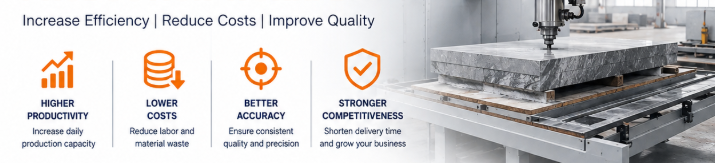
A otimização do fluxo de trabalho ajuda os fabricantes:
✓ Aumentar a capacidade de produção diária
✓ Reduzir custos de mão de obra
✓ Minimizar o desperdício de material
✓ Melhorar a consistência do produto
✓ Reduzir os prazos de entrega
✓ Aumentar as margens de lucro
Antes de investir em novos equipamentos, avalie seu fluxo de trabalho atual.
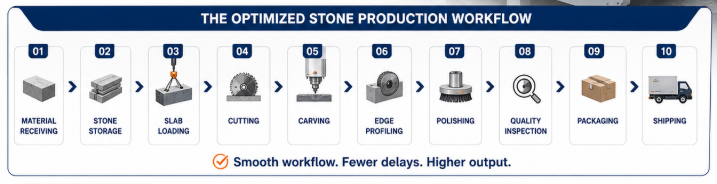
Mapear cada etapa da produção:
Recebimento de materiais——Armazenamento de pedra——Carregamento da laje——Corte--Escultura——Perfilamento de Bordas——Polimento——Inspeção de Qualidade——Embalagem——Envio
Acompanhar:
Muitas fábricas descobrem que os gargalos ocorrem em apenas uma ou duas etapas, tornando as melhorias direcionadas muito mais econômicas do que a substituição completa do equipamento.
As operações manuais geralmente são responsáveis pelas maiores perdas de produtividade.
Exemplo: Layout manual vs. Processamento CNC
| Processo | Método manual | Método CNC |
|---|---|---|
| Medição | Dependente do operador | controlado por CAD/CAM |
| Precisão de corte | Varia de acordo com o trabalhador. | Consistente e preciso |
| Velocidade de produção | Mais devagar | Mais rápido |
| Resíduos de materiais | Mais alto | Mais baixo |
| Repetibilidade | Limitado | Excelente |
| Requisitos de mão de obra | É necessário mais operador. | Menos operadores necessários |
| Projetos complexos | Difícil e demorado | Facilmente automatizado |
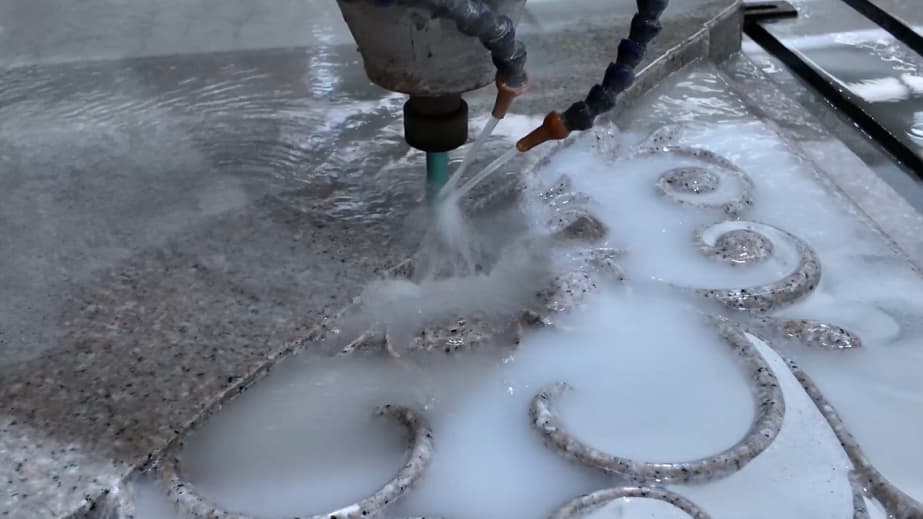
Uma máquina CNC de gravação em pedra pode processar automaticamente entalhes em relevo complexos, bordas decorativas, letras e esculturas 3D com intervenção mínima do operador.
Por exemplo, um Router CNC para pedra de alta resistência É possível processar continuamente padrões de granito e mármore por várias horas, mantendo uma precisão dimensional consistente, reduzindo a necessidade de retrabalho.
Mover pedras costuma ser uma das atividades mais demoradas em uma oficina.
Placas pesadas podem ser transferidas várias vezes antes da conclusão do serviço.
Para melhorar a eficiência:
Exemplo de fluxo de trabalho otimizado
Layout tradicional:
Armazenamento → Corte → Armazenamento → Escultura → Armazenamento → Polimento
Layout otimizado:
Armazenamento → Corte → Escultura → Polimento → Embalagem
Reduzir movimentos desnecessários pode economizar dezenas de horas de trabalho por semana.
Uma das maneiras mais eficazes de otimizar a produção é utilizar equipamentos capazes de realizar múltiplas operações.
A Centro moderno de usinagem CNC em pedra pode realizar:
Corte, Moagem, Gravação, Perfuração, Criação de perfis, Escultura em relevo
Ao reduzir as transferências entre máquinas, os fabricantes melhoram a continuidade do fluxo de trabalho e reduzem as necessidades de mão de obra.
Para a fabricação de bancadas personalizadas, produção de monumentos e projetos arquitetônicos em pedra, o processamento integrado geralmente oferece uma eficiência significativamente maior.
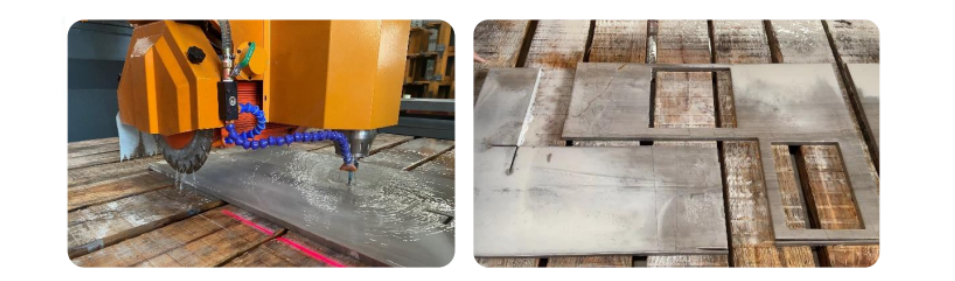
O desgaste da ferramenta afeta diretamente a qualidade da usinagem e a eficiência da produção.
Sinais de má gestão de ferramentas incluem:
Uma ferramenta diamantada desgastada pode aumentar o tempo de corte em 20 a 30%, produzindo resultados de qualidade inferior.
As melhores práticas incluem:
Por exemplo:
Muitas fábricas ainda dependem de cronogramas em papel e instruções verbais.
A gestão digital da produção proporciona:
Os benefícios incluem:
Quando várias máquinas CNC operam simultaneamente, o planejamento digital pode reduzir significativamente o tempo ocioso e os conflitos de produção.
Retrabalho é um dos custos ocultos mais caros na fabricação de pedra.
As causas comuns incluem:
Implementar inspeções em etapas-chave:
Antes de cortar
Verificar:
Antes de polir
Verificar:
Antes da embalagem
Verificar:
A detecção precoce evita o reprocessamento dispendioso posteriormente.
Aplicações diferentes exigem equipamentos diferentes.
Produção de bancada
Equipamento recomendado:
Produção de Monumentos
Equipamento recomendado:
Decoração Arquitetônica
Equipamento recomendado:
Escolher a máquina certa para cada tarefa de produção melhora a produtividade e reduz os gargalos.
P1: Qual é a maneira mais rápida de melhorar a eficiência da produção de pedra?
A melhoria mais rápida geralmente vem da identificação de gargalos e da automatização de operações repetitivas, como corte, gravação ou perfilagem.
P2: Uma máquina CNC para pedra realmente reduz os custos de mão de obra?
Sim. Um operador qualificado geralmente consegue supervisionar vários processos automatizados, reduzindo a dependência de grandes equipes de produção e melhorando a consistência.
P3: Como posso reduzir o desperdício de material pétreo?
Programação CAD/CAM precisa, layouts de encaixe otimizados e corte CNC de precisão ajudam a maximizar o aproveitamento do material.
Q4: Qual etapa do processamento da pedra geralmente causa atrasos?
Em muitas fábricas, o polimento e o acabamento manual representam os maiores gargalos devido à necessidade de muita mão de obra.
Q5: A otimização do fluxo de trabalho é mais importante do que a compra de novas máquinas?
Muitas vezes, sim. Melhorar o layout da produção e a gestão dos processos pode gerar ganhos de eficiência significativos antes que sejam necessários grandes investimentos em equipamentos.
Otimizar o fluxo de trabalho na produção de pedra não se resume simplesmente a trabalhar mais rápido — trata-se de criar um sistema de fabricação mais inteligente e eficiente.
Ao analisar os gargalos, reduzir o manuseio de materiais, automatizar tarefas repetitivas, implementar o planejamento digital e investir nos equipamentos certos para processamento de pedra, os fabricantes podem aumentar a produção, melhorar a qualidade e fortalecer sua posição competitiva no mercado global.
Com o crescimento contínuo da demanda por produtos de pedra personalizados, as fábricas que combinam maquinário de ponta para processamento de pedra com gestão de produção eficiente estarão em melhor posição para alcançar o sucesso a longo prazo.
Deixe um recado
Digitalizar para Wechat :

Digitalizar para WhatsApp :






 Rede IPv6 suportada